More Than a Taco: The Border-Crossing Story of Puebla's Taco Árabe

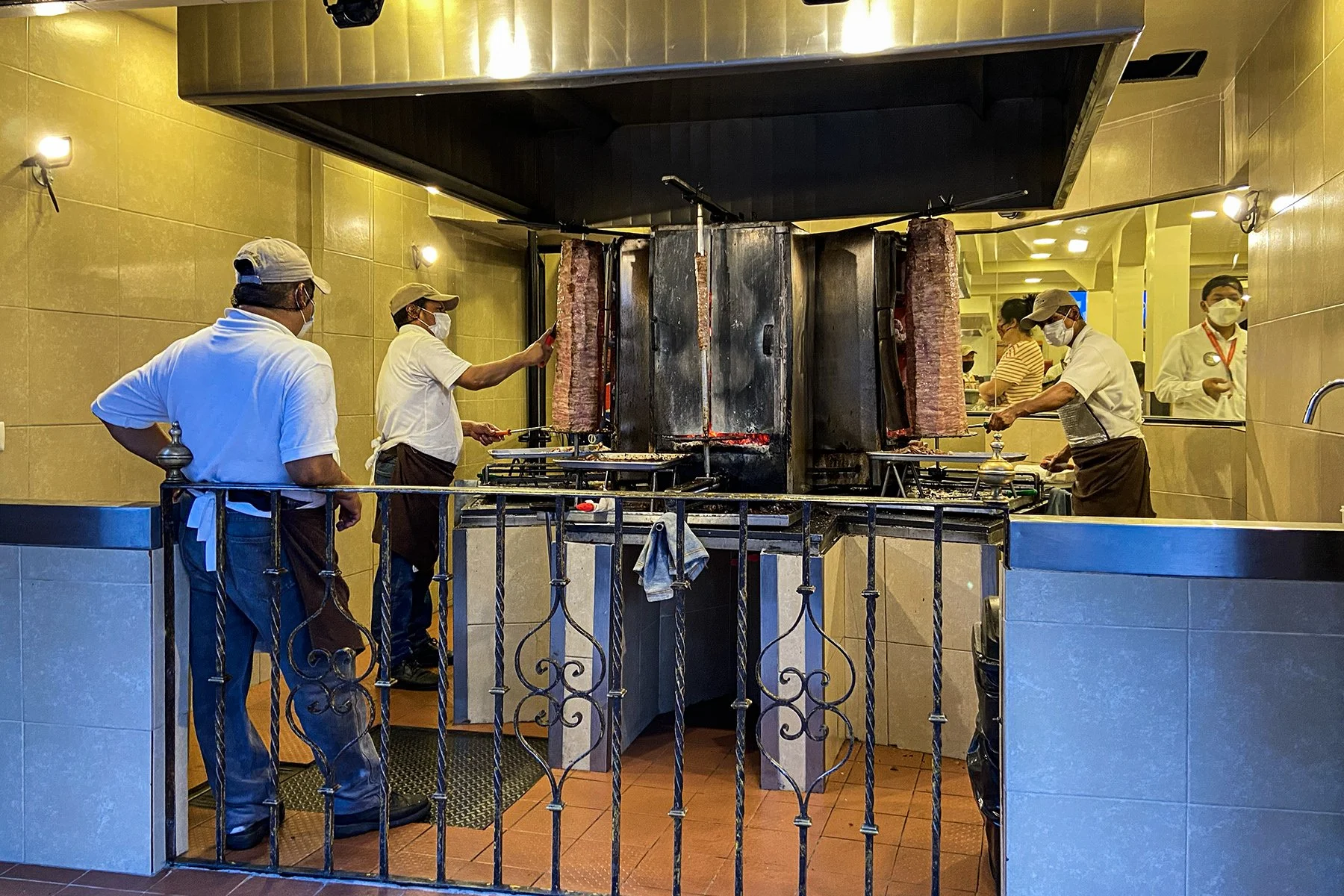
Stand outside almost any taquería in Puebla, and you'll recognize the scene instantly. A vertical spit slowly turns before an open flame as thin slices of marinated pork caramelize around the edges. The taquero deftly shaves the meat into a warm flour flatbread before adding chipotle salsa and, perhaps, a squeeze of lime.
At first glance, it looks familiar.
Yet this is not tacos al pastor.
This is the taco árabe, one of Mexico's most remarkable examples of how migration reshapes culture—one delicious bite at a time.
A Journey Across Continents
Imperium Turcium (Osmanisches Reich), c. 1700
The story begins not in Mexico, but thousands of miles away in the eastern Mediterranean.
During the late nineteenth and early twentieth centuries, political upheaval and economic uncertainty prompted thousands of immigrants from the Ottoman Empire to seek new lives in the Americas. Although many were officially documented as "Turks" because they carried Ottoman passports, they were in fact Arabs from present-day Lebanon, Syria, Palestine, and Iraq. Mexico welcomed many of these newcomers, and Puebla became one of the country's most important centers of Middle Eastern immigration.
Like immigrants everywhere, they brought more than luggage.
They carried recipes.
Among them was the tradition of roasting seasoned meat vertically—a technique known throughout the Middle East as shawarma or kebab.
Puebla Makes It Its Own
Migration rarely preserves tradition unchanged.
It adapts.
The original shawarma was typically made with lamb wrapped in pita bread. In Puebla, however, lamb was less common while pork was abundant and already deeply embedded in regional cuisine. Gradually, local cooks substituted pork for lamb while retaining the vertical spit and aromatic seasoning that characterized the original dish.
The bread changed as well.
Instead of traditional pita, taqueros developed what became known as pan árabe—a soft, flour flatbread that is somewhere between pita and a northern Mexican flour tortilla. The finished taco was usually served simply, accompanied by a smoky chipotle salsa rather than the garlic sauces common in the Middle East.
The result wasn't an imitation of shawarma.
Nor was it simply another Mexican taco.
It was something entirely new.
The Families Behind the Tradition
Among the families most closely associated with the taco árabe are the Galeanas and the Tabes, whose names remain woven into Puebla's culinary history.
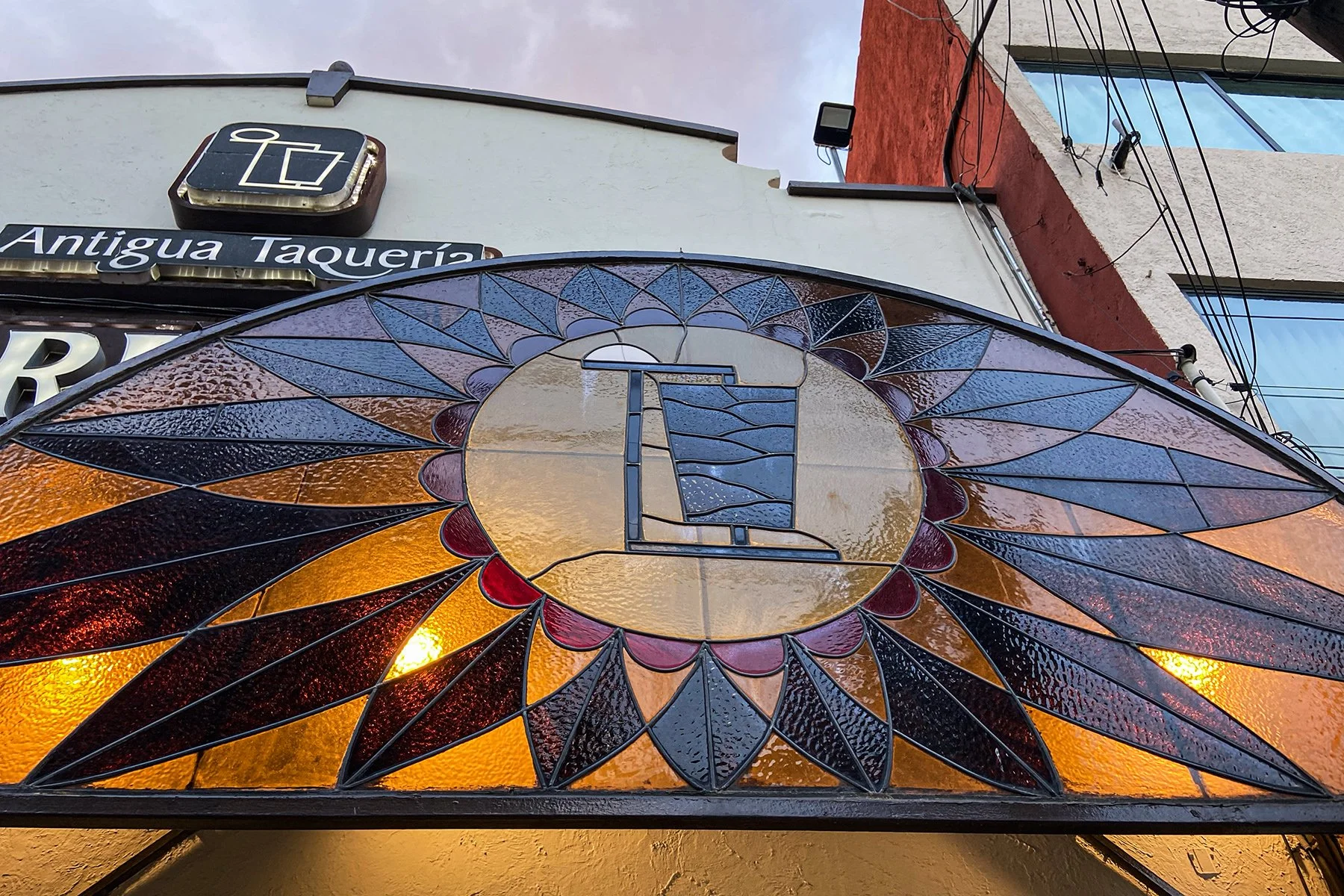
Accounts vary in detail—as is often the case with beloved local traditions—but many trace the popularization of the taco árabe to the Galeana family in the 1930s. Their taquerías introduced generations of Poblanos to a dish that blended Middle Eastern techniques with Mexican ingredients. Restaurants such as Bagdad and later La Oriental helped transform what began as an immigrant specialty into one of Puebla's defining foods.
Today, nearly every Poblano has a favorite taco árabe.
Everyone also has an opinion about which taquería makes the best one.
The Father of al Pastor
Ironically, the taco árabe's greatest legacy may be another taco altogether.
As the vertical spit became more common, cooks continued adapting the recipe. The flatbread gave way to corn tortillas, new marinades incorporated dried chiles such as guajillo and achiote, and eventually, pineapple found its way onto the rotating trompo.
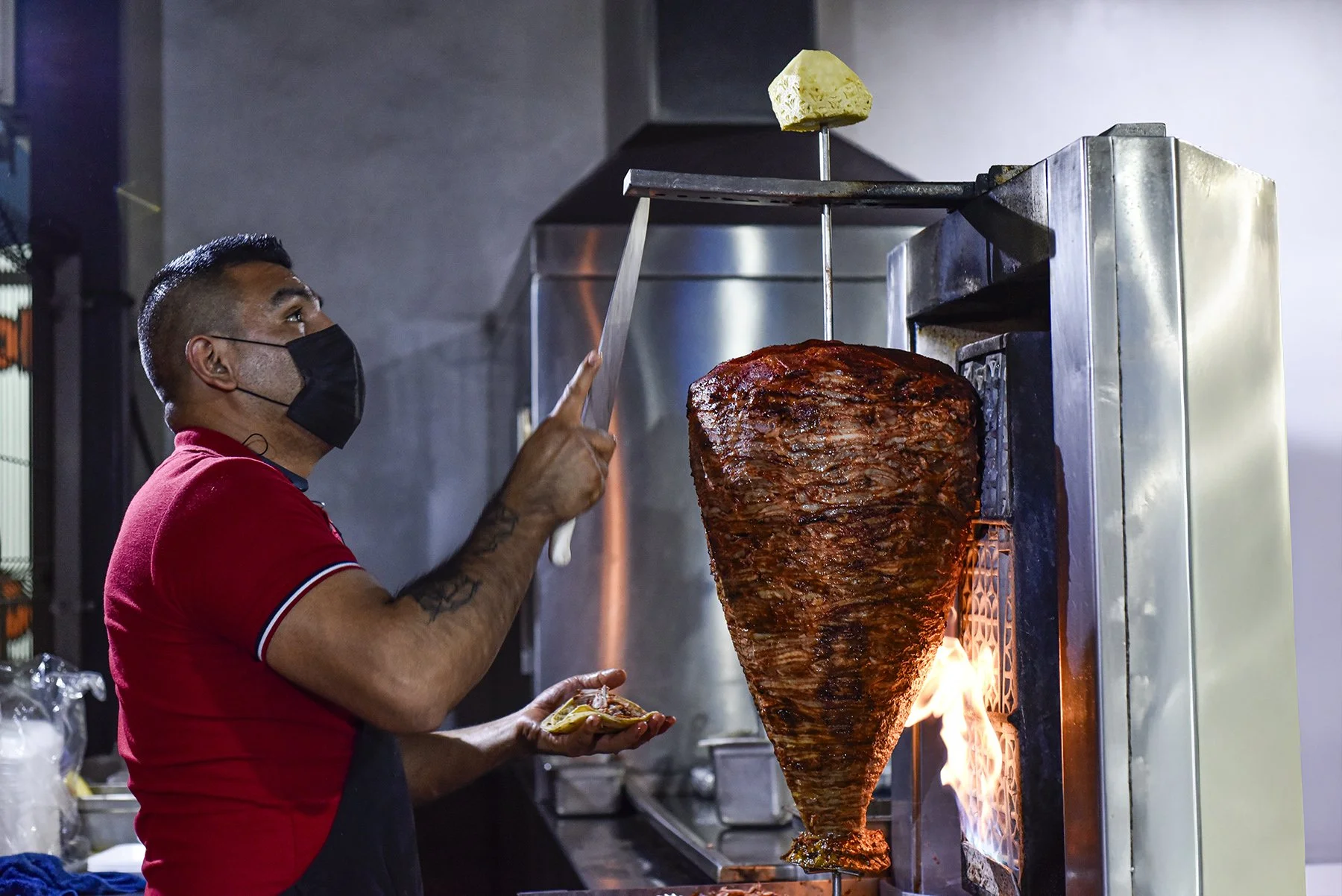
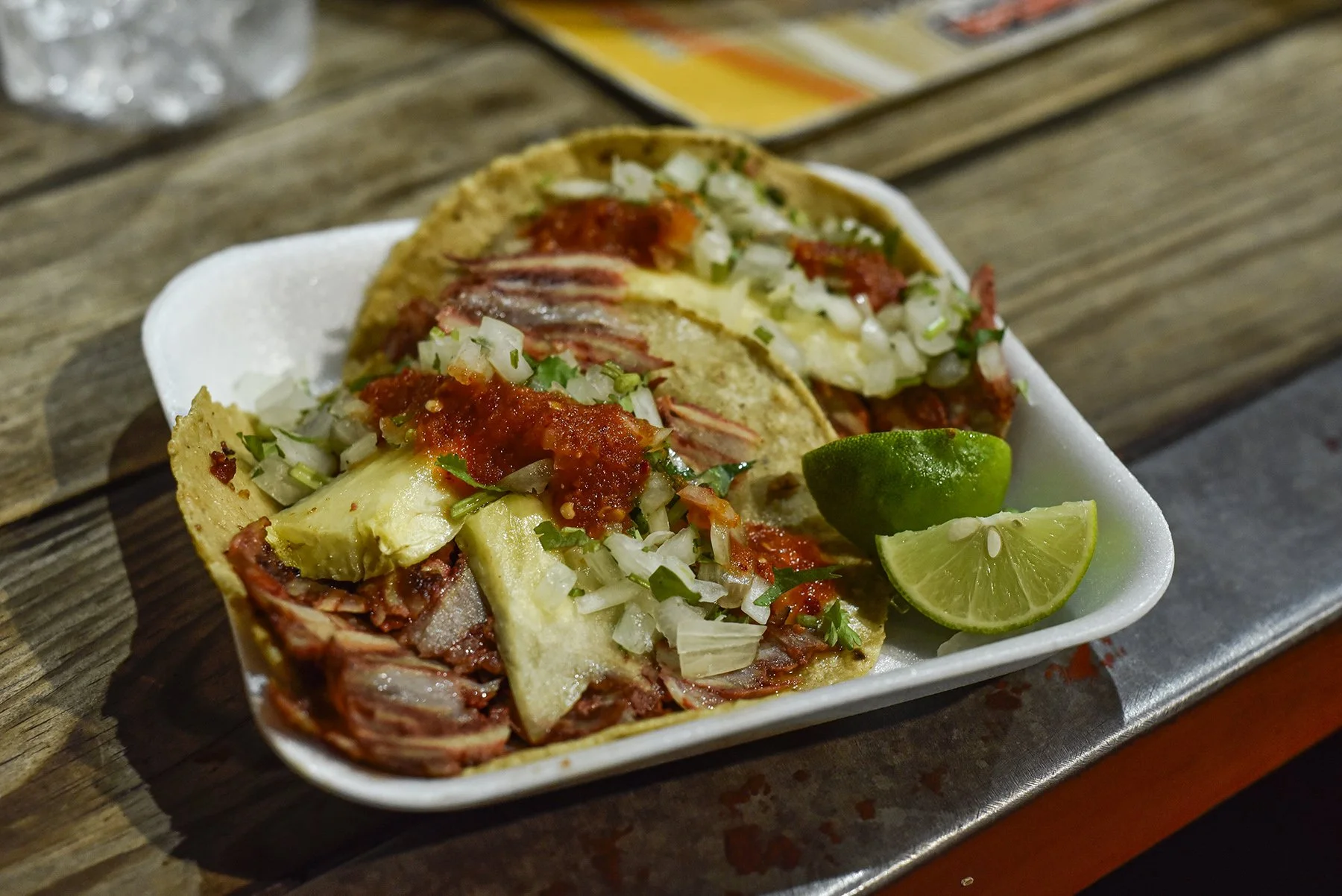
The result was tacos al pastor.
While food historians continue to debate the exact evolution of pastor, there is broad agreement that Puebla's taco árabe provided the culinary bridge between Middle Eastern shawarma and one of Mexico's most iconic street foods.
A Borderlands Lesson
The taco árabe reminds us that culture is rarely static.
Mexico has always been shaped by movement.
Indigenous peoples exchanged crops and ideas long before European arrival. Spanish colonists introduced livestock and wheat. Chinese immigrants left their mark on Mexicali. Japanese farmers transformed agriculture in Baja California. Lebanese entrepreneurs reshaped commerce from Yucatán to Puebla.
Each community arrived carrying memories of home. Each left something behind.
The taco árabe is not merely a fusion of two cuisines. It is the story of immigrants adapting to unfamiliar ingredients while preserving familiar techniques. It is a reminder that identity is built through exchange rather than isolation.
Like so many stories in the borderlands, it demonstrates that the most enduring traditions are often those born where cultures meet.
The next time you bite into a taco árabe in Puebla, you're tasting more than marinated pork wrapped in warm bread.
You're tasting a century of migration, adaptation, and cultural exchange—one of Mexico's most delicious histories.
Taste the Story for Yourself
Reading about the taco árabe is one thing.
Standing beside the trompo where it's prepared, tasting it fresh from the grill, and discovering the neighborhoods, markets, and centuries of history that gave birth to one of Mexico's most iconic culinary traditions is something else entirely.
Join Borderlandia on our Puebla: Mexico’s Cultural Capital Tour, where food becomes a gateway to understanding Mexico. Together we'll explore the birthplace of the taco árabe, savor authentic mole poblano, walk the colorful streets of Puebla's UNESCO-listed historic center, climb the Great Pyramid of Cholula, and experience the history, architecture, and living traditions that make this city one of Mexico's greatest cultural treasures.
Reserve your place today and discover the stories behind every bite! Click here for details.