In southern Arizona, shrines—ranging from small roadside crosses and painted niches to stone chapels in the hills—represent a rich history of faith, migration, and memory. Many of these shrines are Catholic, reflecting Spanish and Mexican influences, while others mark Indigenous sacred sites or honor travelers who have died in the desert. They serve as venues for rituals, seasonal offerings, and community gatherings. Weathered icons, rosaries, candles, and handwritten notes convey personal stories of devotion, grief, and connections to past generations.
These types of neighborhood shrines—often referred to as grutas (grottos) or capillitas (little chapels)—are significant cultural touchstones. They are typically built by families or community members and often provide a quiet place for reflection and private prayer, or serve as an active ofrenda (altar) during local celebrations such as Día de Muertos (Day of the Dead) and the annual Feast of Our Lady of Guadalupe in December.
El Tiradito
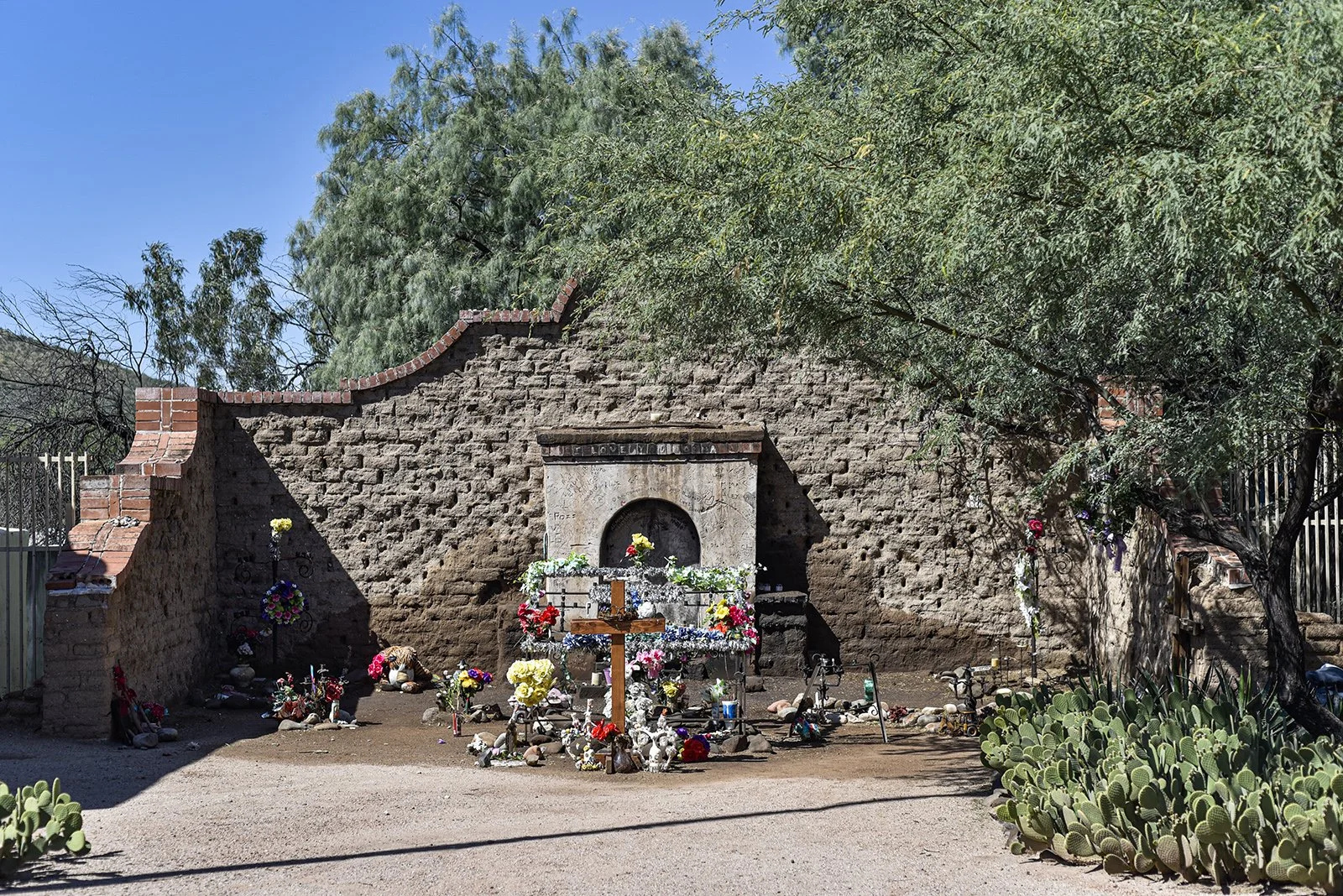
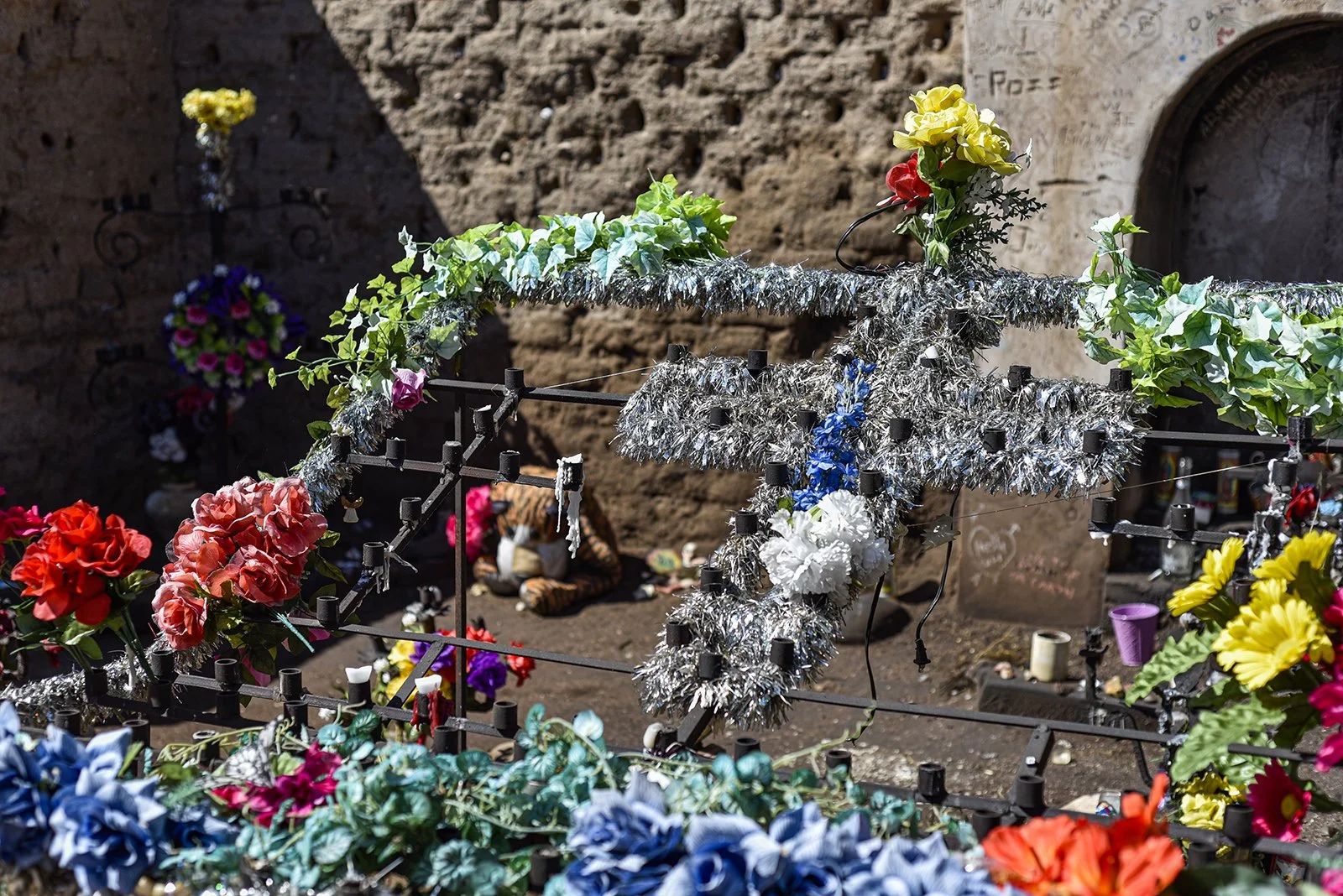
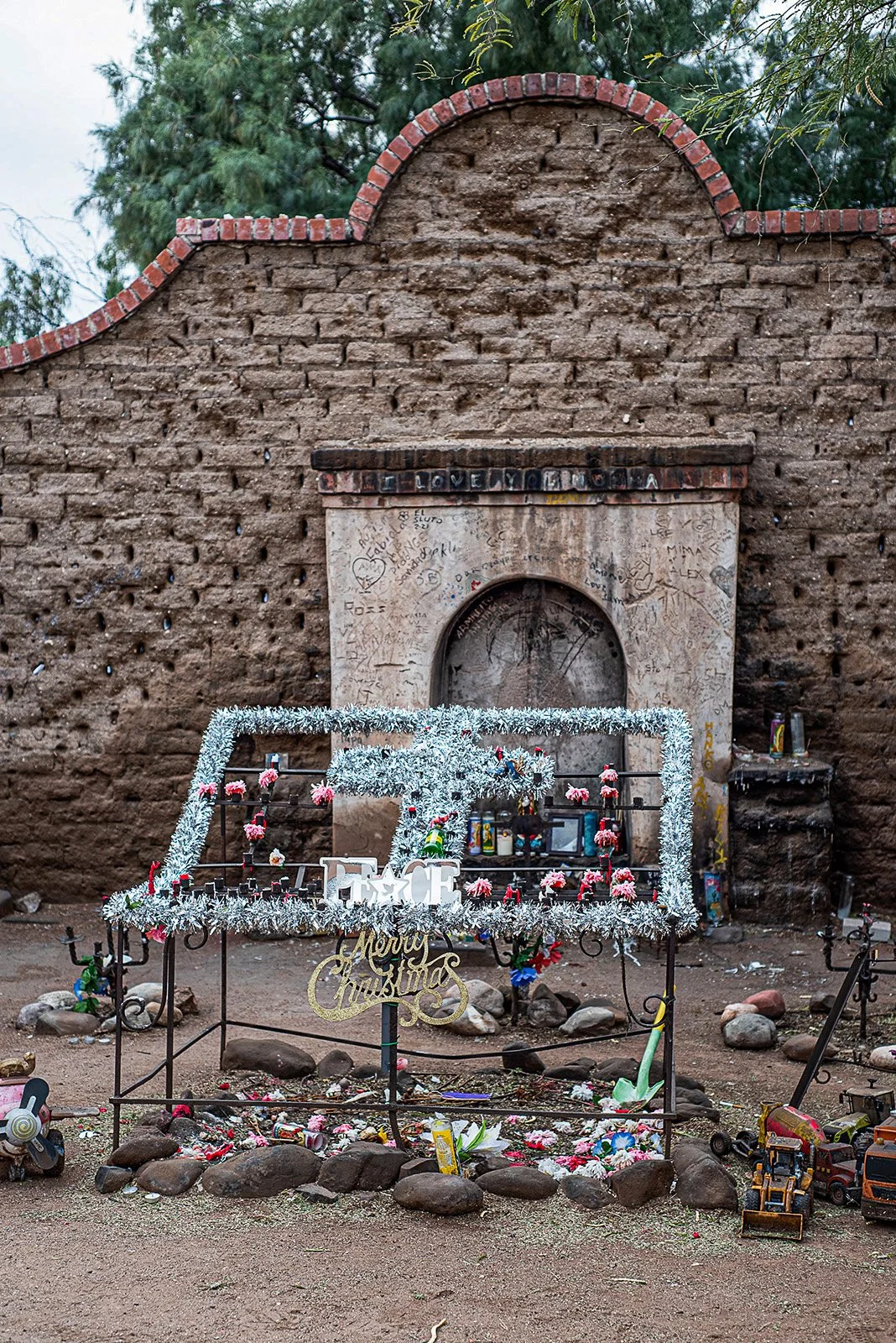
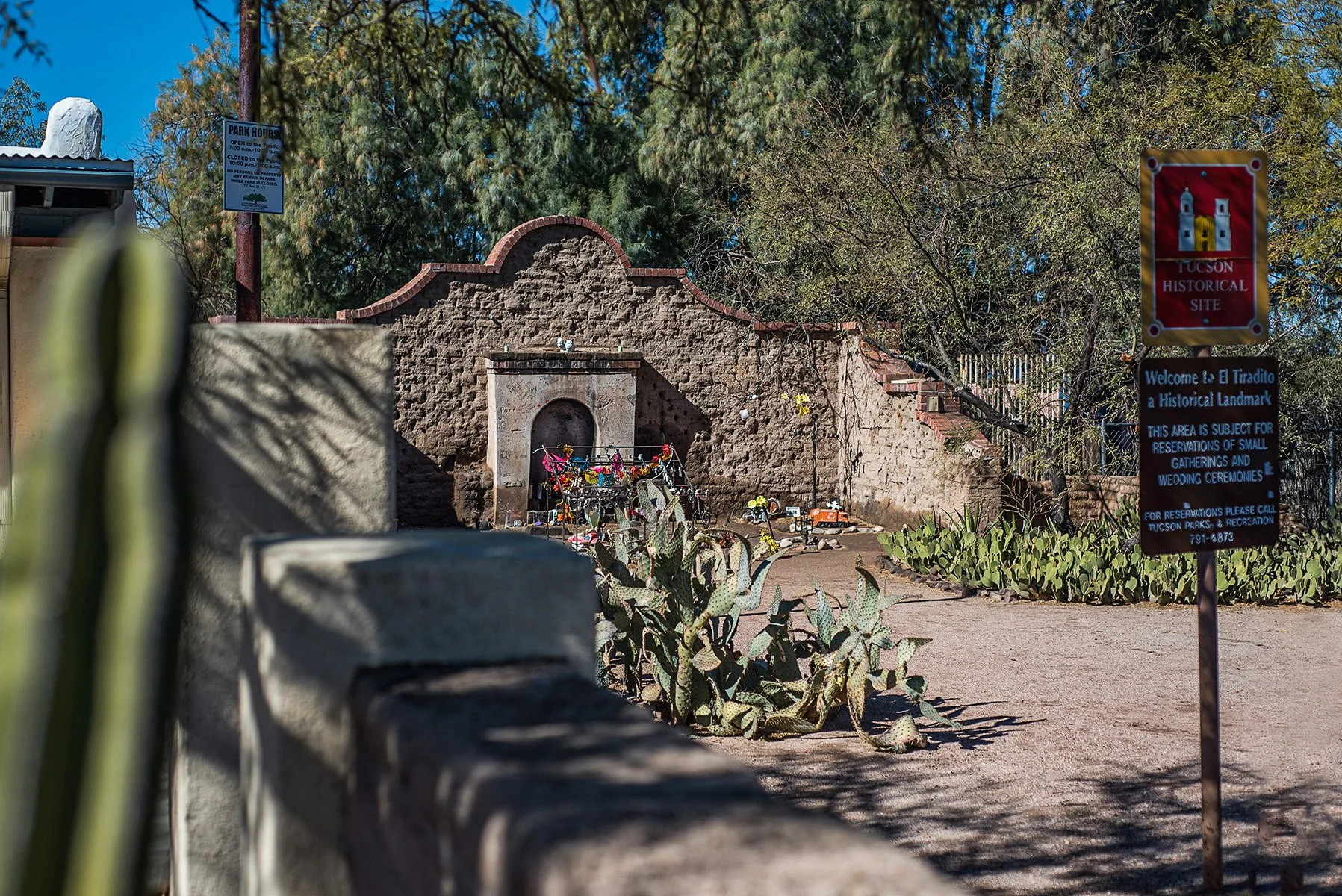
El Tiradito ("the little castaway") shrine in the Barrio Viejo area in Tucson, Arizona, is a local landmark memorial where the community gathers to honor victims of violence and offer prayers for healing; adorned with candles, flowers, handwritten notes, and images, it reflects Tucson’s blend of Mexican cultural traditions and local civic grief, serving both as a spiritual refuge and a visible reminder of ongoing social issues. El Tiradito shrine traces its roots to the city's 19th-century frontier era, evolving from a modest roadside altar into a recognized site of communal memory, especially during Holy Week and personal observances such as petitions for healing or protection.
Shrine in Tubac, AZ
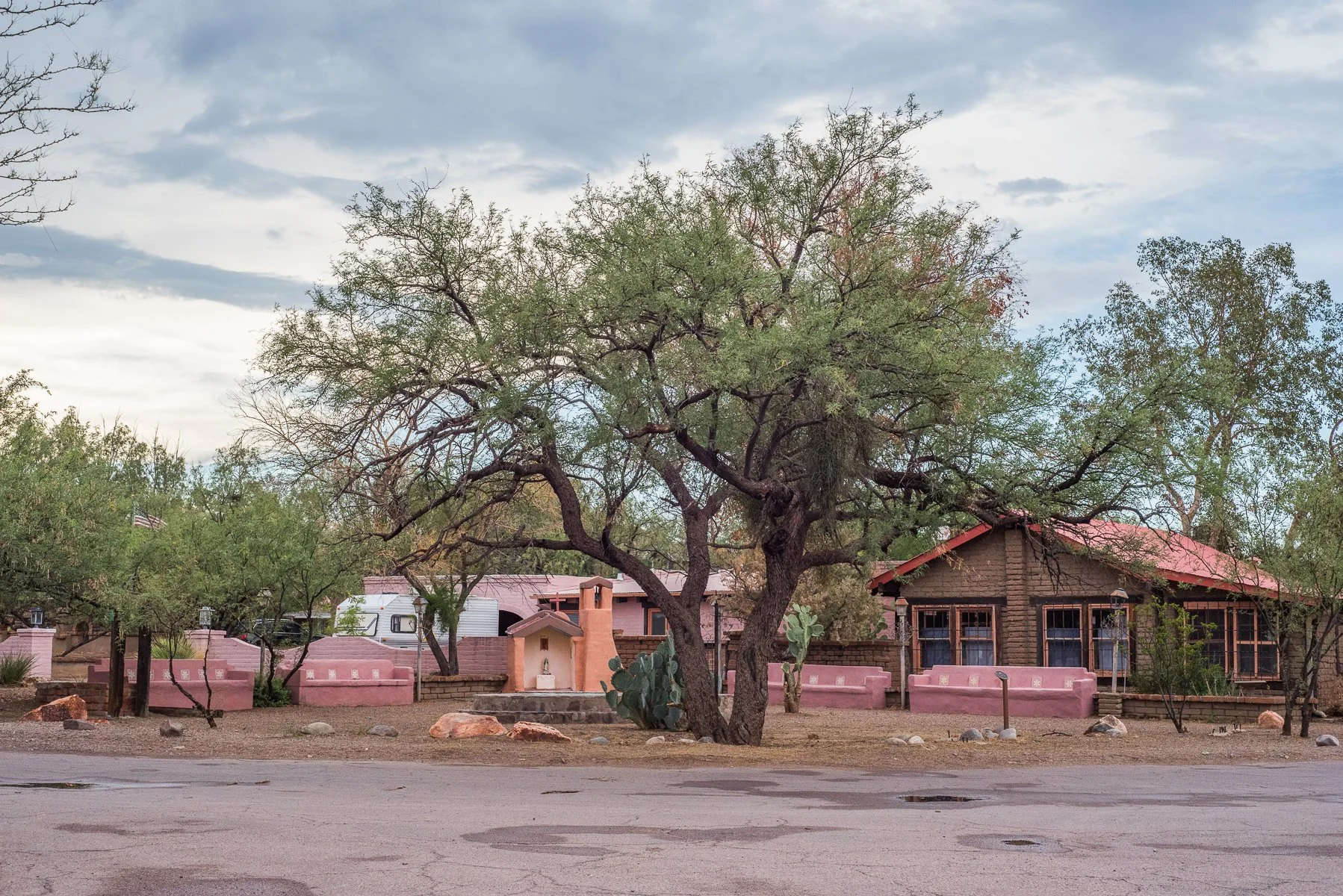
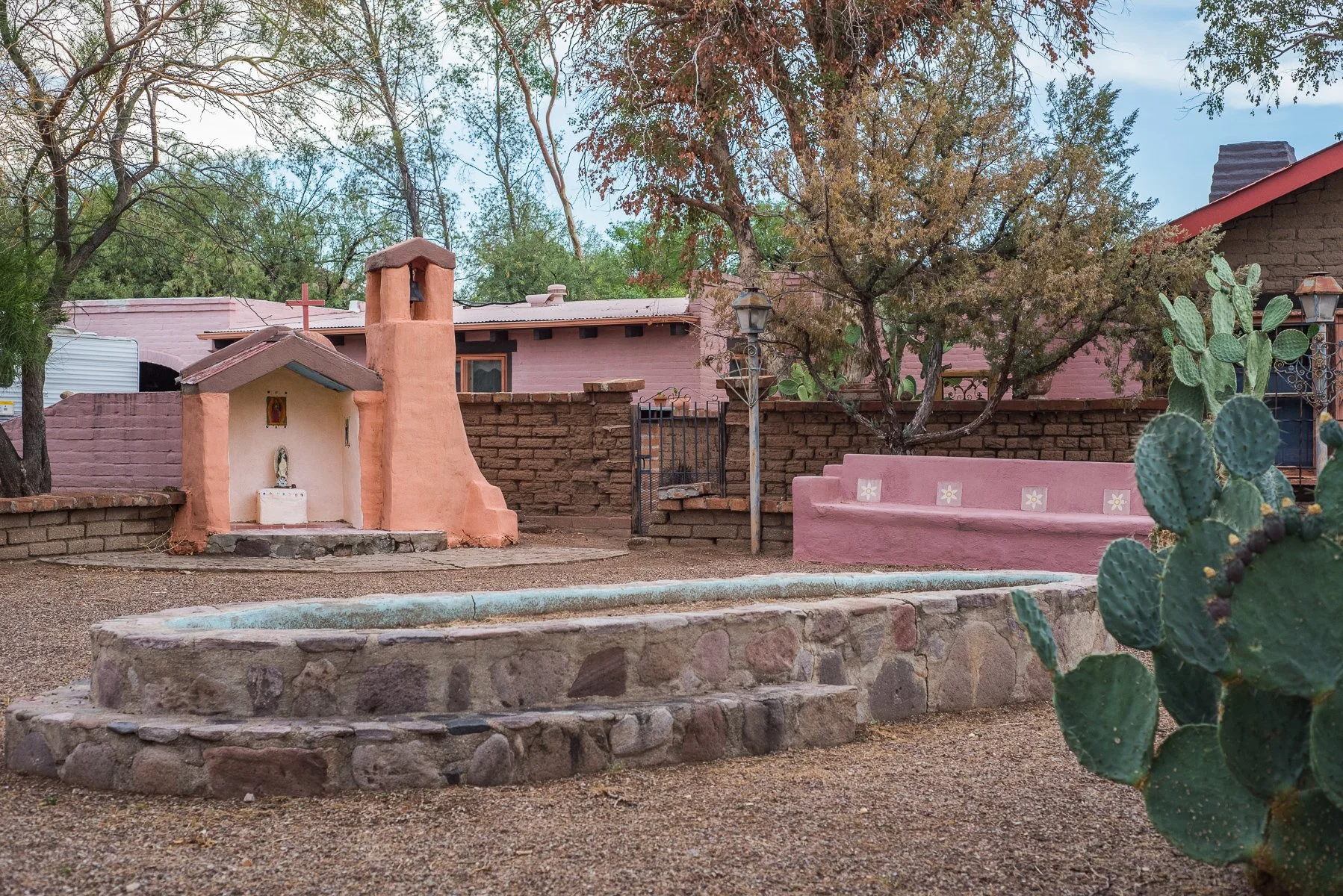
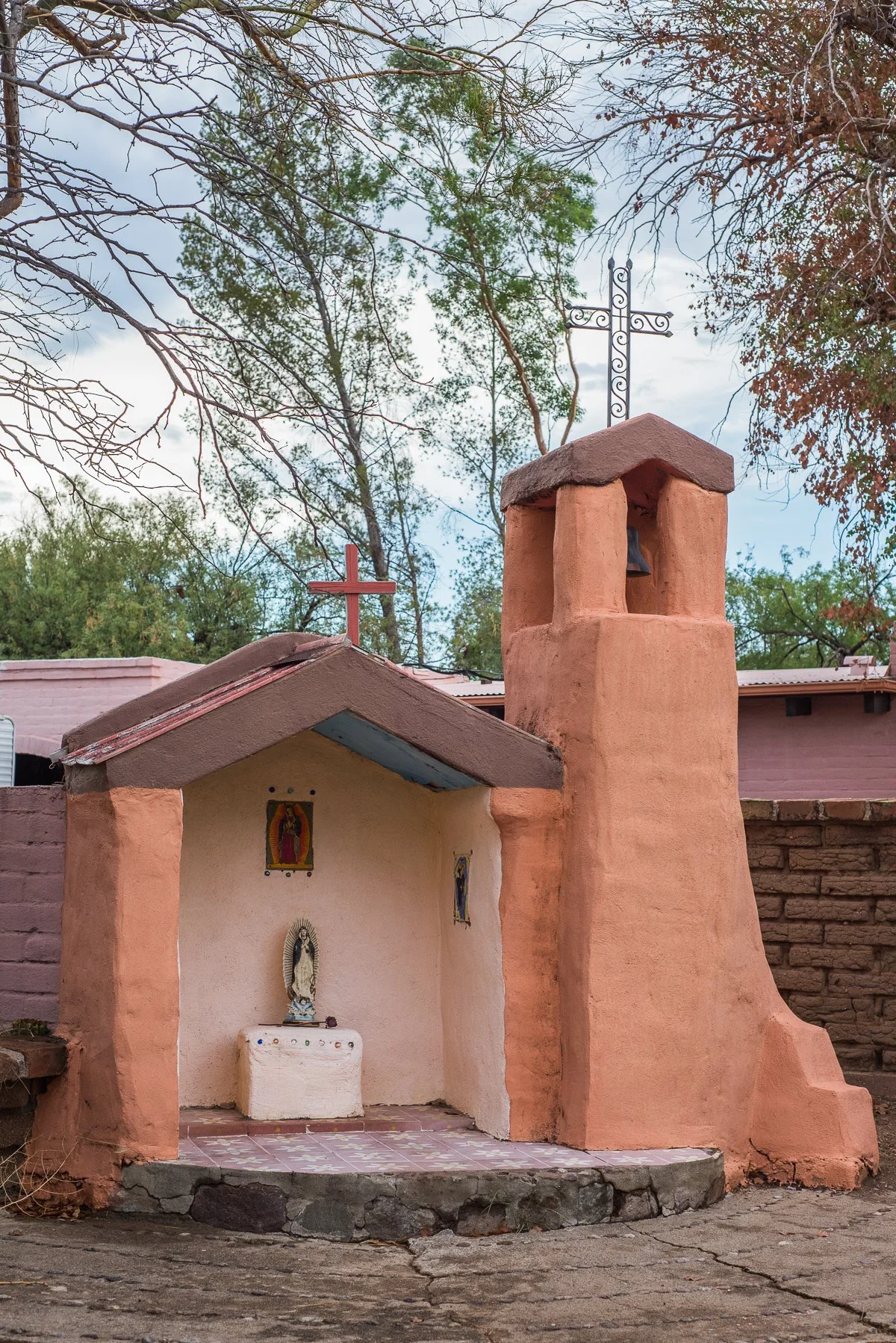
Nestled at the historic crossroads of Tubac Road and Burruel Street in Tubac, Arizona, this enchanting site stands as a beloved roadside shrine celebrating the artistry and devotion surrounding Our Lady of Guadalupe. With its vibrant local craftsmanship, the shrine captures the essence of folk art, showcasing intricate details that reflect the area's rich cultural heritage. Positioned prominently in front of the Tubac Presidio, it offers visitors a stunning visual and spiritual experience, inviting all to pause and appreciate its beauty and significance.
Eternally Lit Shrine
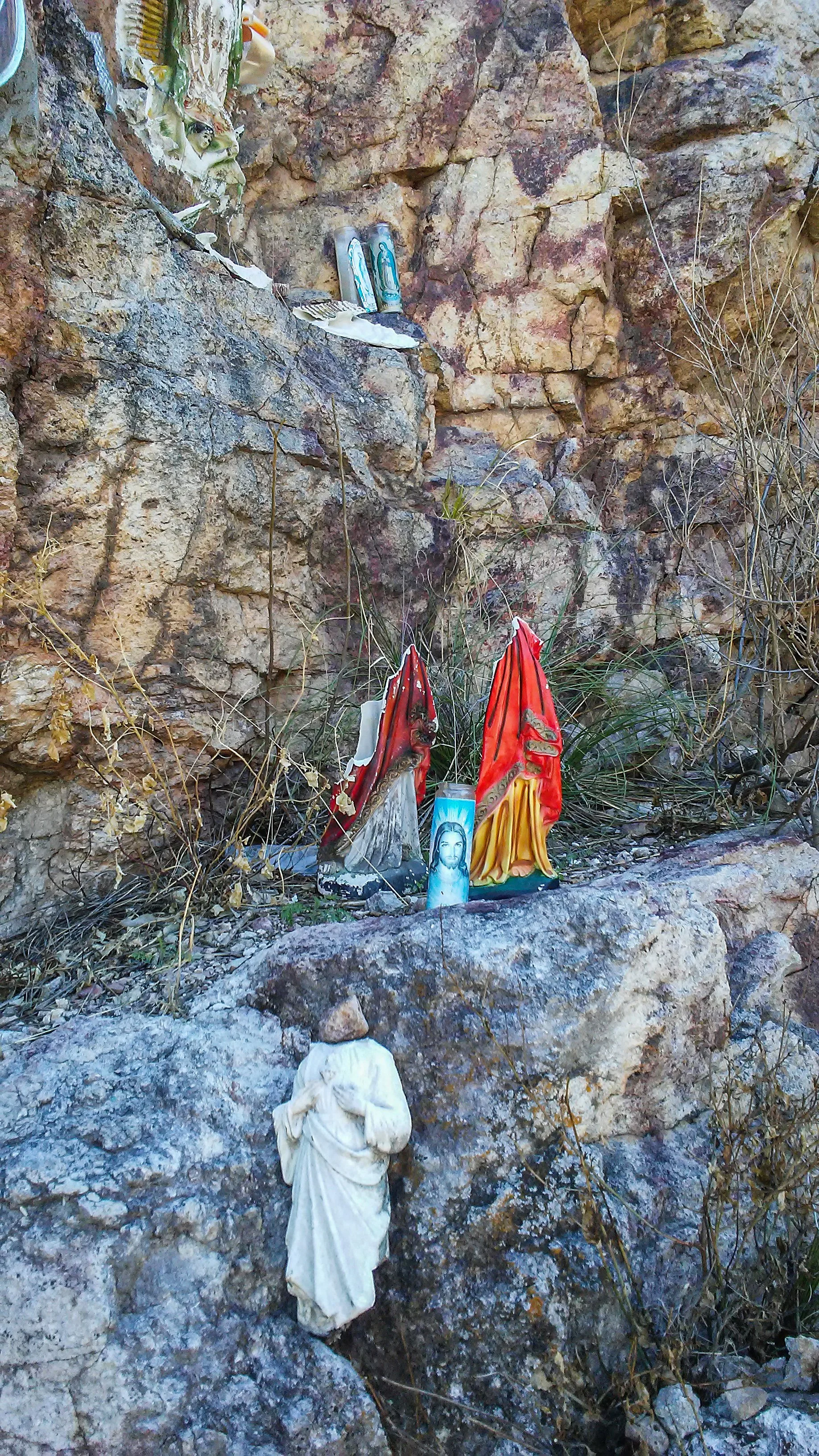
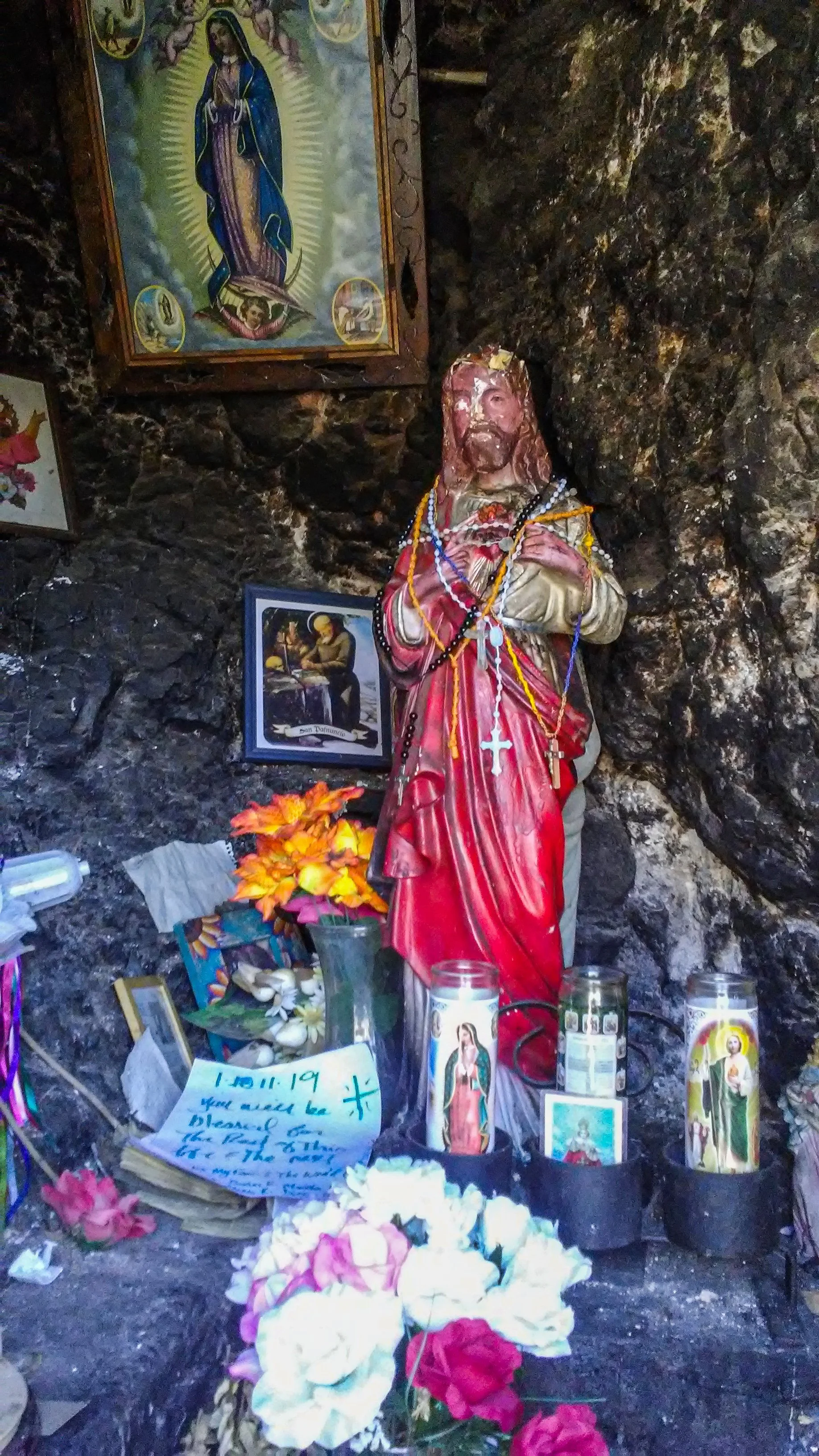
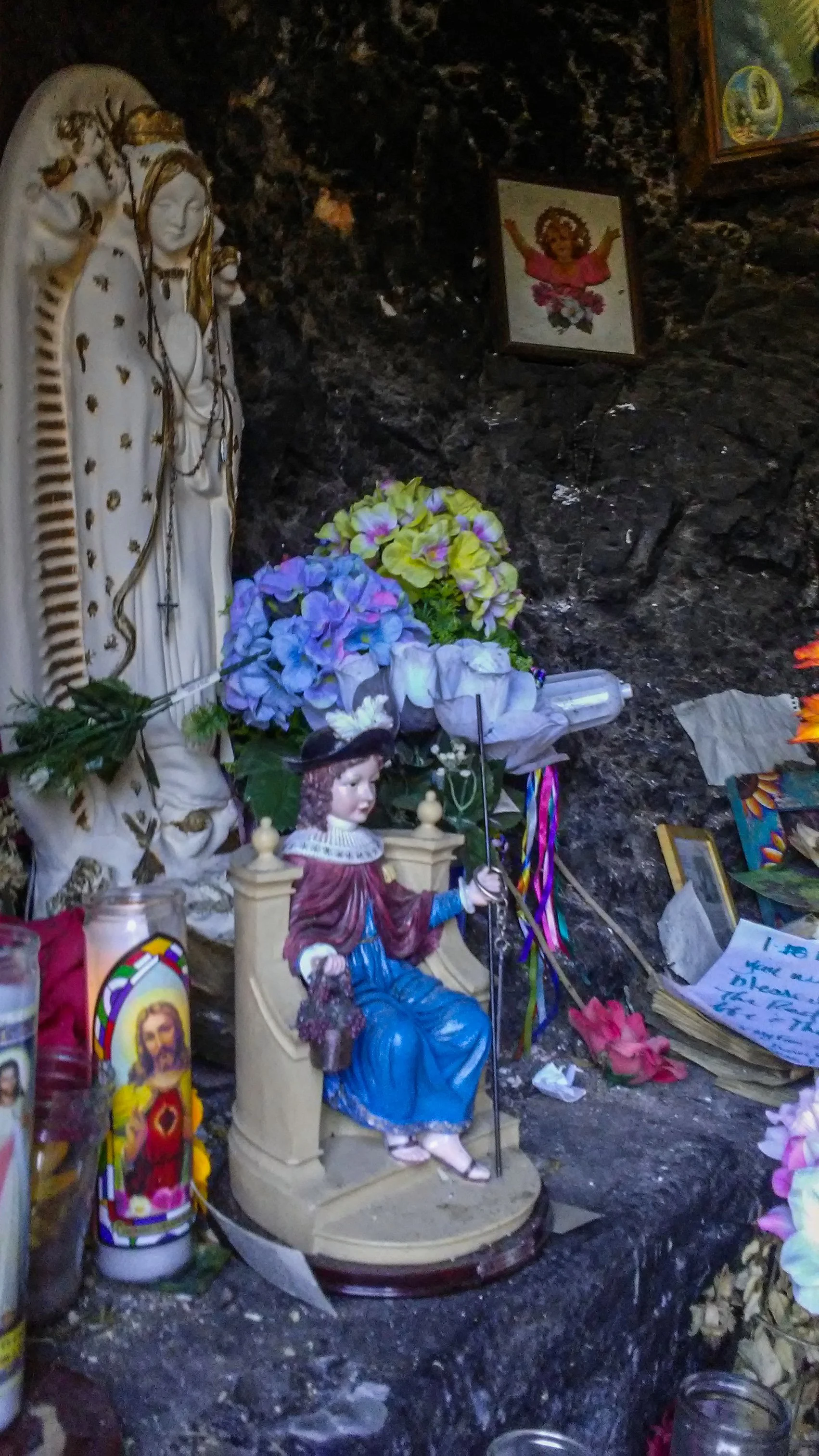
The Eternally Lit Shrine, affectionately referred to as the Telles Family Shrine, is built directly into a natural hillside grotto off Highway 82, south of Patagonia, AZ, and has a rich history dating back to the 1940s. It was founded by Juan and Juana Telles, who made a heartfelt vow to God, pleading for the safe return of their beloved sons who were bravely serving in the turmoil of World War II and the Korean War. Over the decades, this shrine has become a symbol of hope and resilience, with dedicated townspeople and visitors alike ensuring the flickering candles are never extinguished. Their unwavering commitment keeps the shrine's spirit alive, illuminating the path of faith and remembrance for all who visit.
Fray Marcos de Niza Roadside Shrine
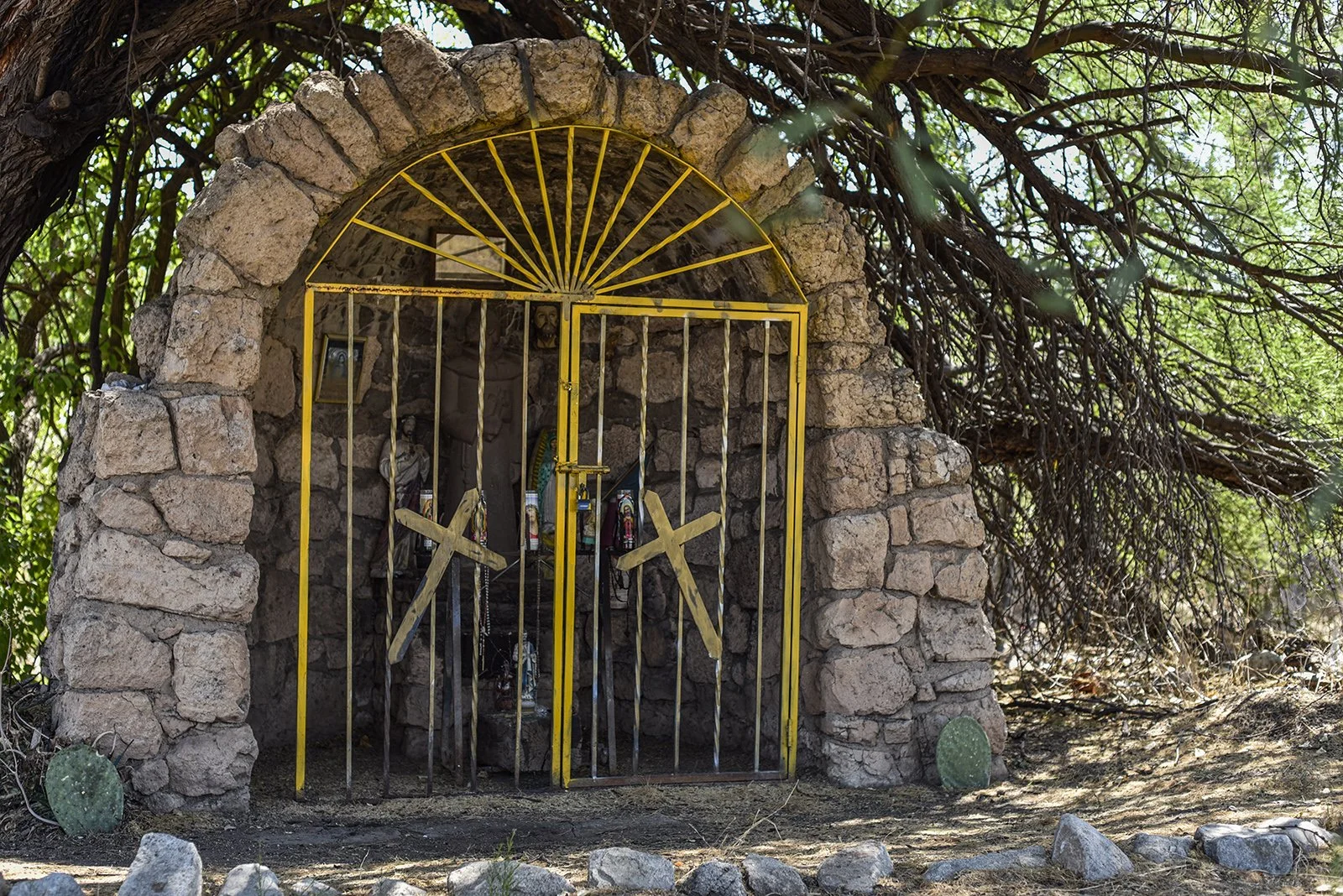
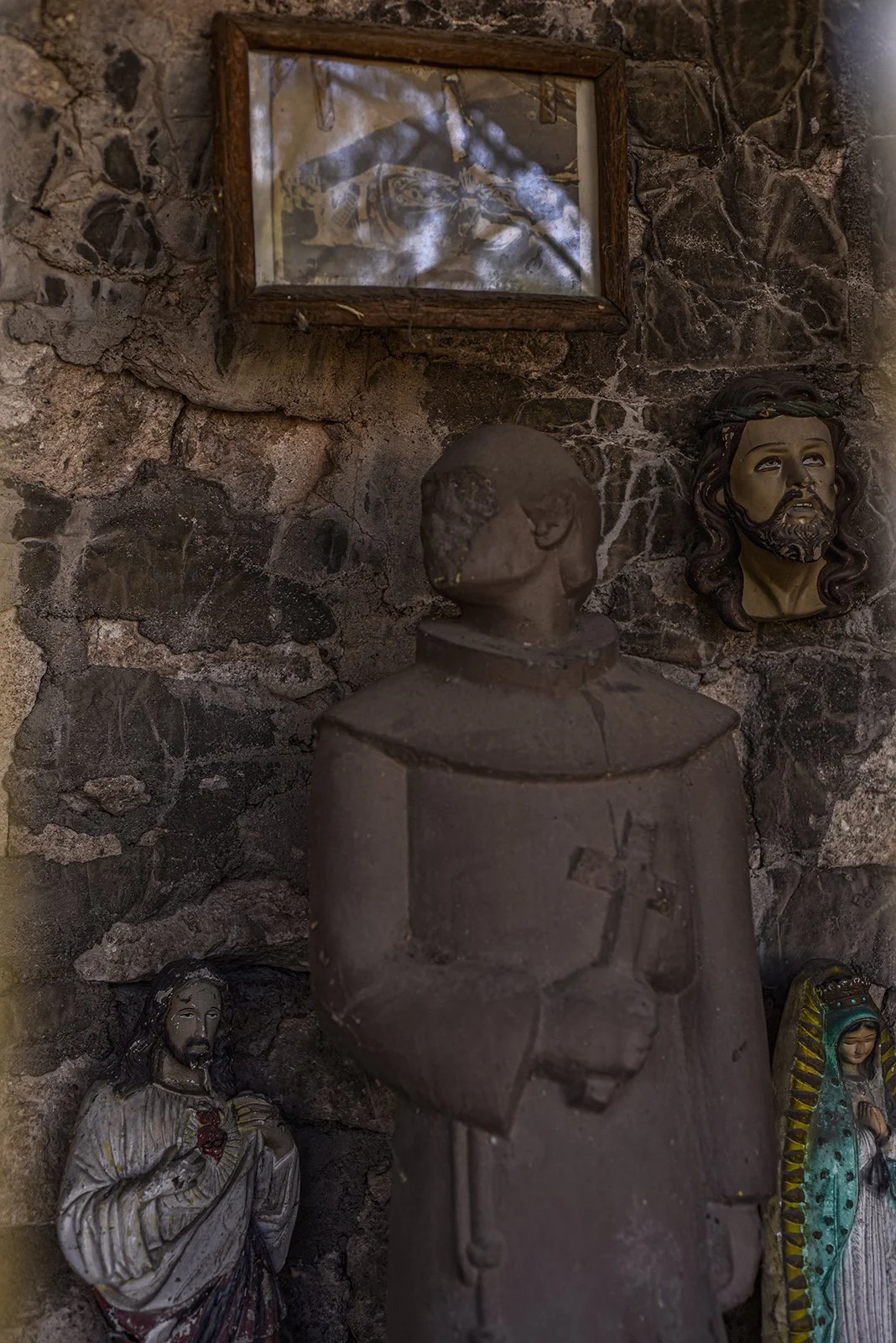
The historic Fray Marcos de Niza Roadside Shrine is a stone grotto located along the highway just outside Nogales, Arizona. It was built in 1939 as part of the "Camino de los Padres" roadside project. A prominent feature of the shrine is a 3-foot concrete statue representing an early-historic priest, often identified as Fray Marcos de Niza, sculpted by artist Kathleen Wilson under the Federal Art Project (FAP). Originally created as a public art installation to commemorate regional history, the grotto has evolved into a vibrant community shrine, a significant stopping point for the St. Francis pilgrimage, and a site for offerings from travelers passing through the borderlands.
Have you seen these shrines or others in the borderlands?